
In today’s rapidly evolving technological landscape, building scalable systems is not just desirable but essential. Backend engineers and system architects are consistently on the hunt for robust solutions that can handle vast amounts of data efficiently. Event-driven architecture, coupled with Redis Streams, offers a compelling solution to this challenge. By leveraging this architecture, developers can create responsive systems that are both scalable and resilient.
Redis Streams is a data structure provided by Redis since version 5.0, optimized for storing and processing streams of data. It empowers developers to craft applications that process high-throughput data streams in real-time. Given its versatility and performance, Redis Streams stands out as a preferred choice for implementing event-driven designs.
This article delves into the practicalities of implementing an event-driven architecture using Redis Streams, discussing its benefits, potential challenges, and how to effectively overcome them.
Understanding Event-Driven Architecture
Event-driven architecture (EDA) is a model where events are the primary means of communication between decoupled components of a system. Events can trigger reactions or processes asynchronously, enhancing the system’s scalability and responsiveness. EDA is essential in distributed systems and microservices, offering significant benefits:
Why Redis Streams?
Redis Streams provides a suite of features that make it ideal for event-driven applications. It supports:
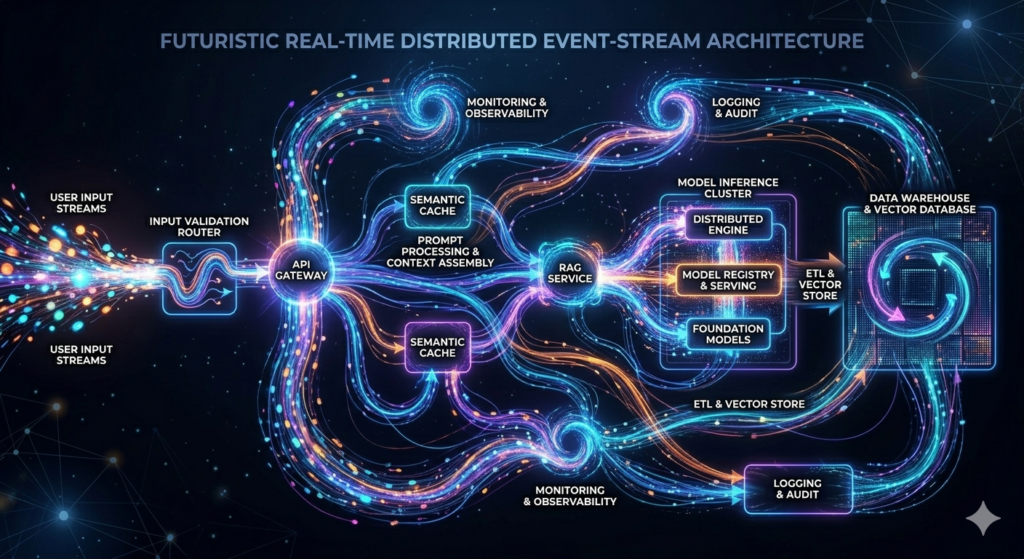
Moreover, Redis Streams allows for consumer groups, enabling multiple consumers to read from the same stream concurrently without duplicating work. This ensures efficient load balancing and fault tolerance, which are key in scalable systems.
Implementing Redis Streams
Implementing Redis Streams in your architecture is straightforward. Here’s a practical guide:
While Redis Streams is powerful, certain caveats exist. Monitoring performance and ensuring message order consistency is crucial to maintain stability in a high-load environment.
Common Challenges and Solutions
“The complexity of event-driven systems often lies in the details of orchestration and message handling.” – Anonymous Architect
Despite its advantages, Redis Streams can introduce complexity, particularly in error handling and message delivery guarantees. Here are some common challenges and solutions:
Challenge: Message loss due to consumer failures.
Solution: Implement reliable delivery mechanisms and acknowledgment protocols.
Challenge: Ensuring order of messages.
Solution: Use consumer groups wisely to manage order and deliver messages appropriately.
Conclusion
Integrating Redis Streams into your event-driven architecture can significantly enhance your system’s scalability and throughput. While challenges exist, careful planning and management can mitigate these issues. For backend engineers and system architects, Redis Streams offers the tools needed to build responsive, scalable systems ready for the future.
As technology progresses, adopting such innovative architectures will ensure systems remain efficient and competitive. Redis Streams stands as a testament to this evolution, providing practical, scalable solutions for modern-day applications.