As data continues to grow exponentially, building accurate and responsive retrieval-augmented generation (RAG) systems becomes critical. In 2026, leveraging hybrid search strategies by combining vector search, keyword search, and metadata filtering emerges as a robust solution for enhancing accuracy and performance.
Introduction
Architects face daunting challenges in designing systems that handle scale and complexity while maintaining high reliability. The traditional approaches using either vector search or keyword search in isolation often lead to inefficiencies and inaccuracies, especially in large-scale systems. The solution lies in an integrated architecture that balances these techniques.
Architectural Evolution of Hybrid RAG Pipelines
Over the years, RAG systems have evolved from simple keyword-based systems to employing complex machine learning models for vectorized search. Each approach has merits and limitations, prompting the need for an evolved hybrid model.
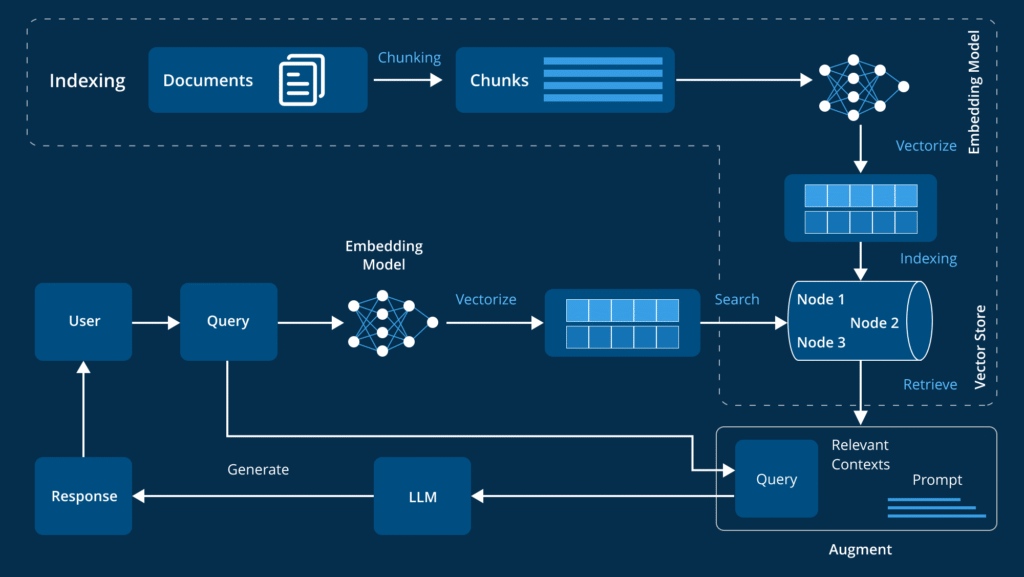
Core Components of Hybrid Systems
A hybrid RAG pipeline utilizes:
Comparison of Approaches
Deciding between different architectures involves examining their tradeoffs and advantages.
Approach Evaluation Table
The table below illustrates differences in key areas:
Criteria Vector Search Keyword Search Hybrid Search Accuracy High Moderate Very High Scalability Limited High Moderate Complexity High Low Moderate
Architecture Flow Explanation
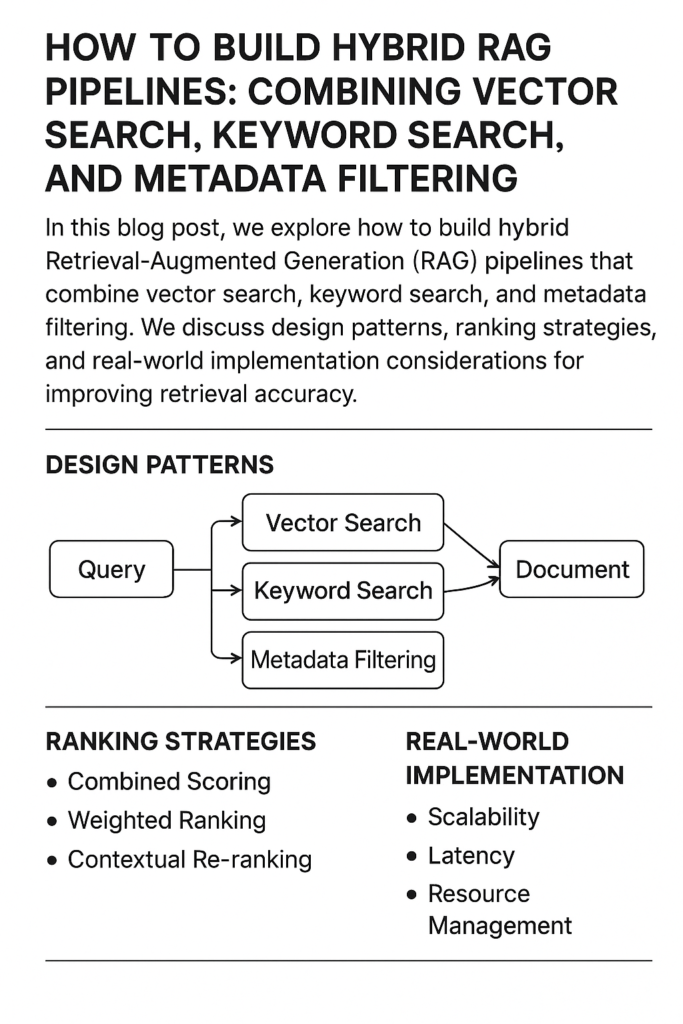
In a hybrid RAG system, incoming queries first undergo metadata filtering, reducing the search space based on context. Next, a combination of keyword and vector search ensures both precision and semantic relevance, generating a rich set of results. This layered querying optimizes response times while maintaining accuracy.
Handling Scalability and Reliability
Ensuring horizontal scalability is achieved by distributing the vector and keyword indices across nodes, enabling parallel processing. Failure handling is enhanced via redundancy and real-time monitoring to swiftly reroute traffic or rectify faults.
Tradeoffs and Design Decisions
While hybrid systems offer enhanced accuracy, they introduce additional complexity. Balancing resource usage and real-time performance against the precision of search results is key. A multi-layered data indexing strategy might be necessary, which increases operational overhead.
Data Consistency and Coordination
Choosing the correct data consistency model is crucial. An eventual consistency model may allow for more fluid integration but requires sophisticated reconciliation mechanisms to manage temporary data inconsistencies.
Conclusion
The future of RAG pipelines lies in hybrid architectures that embrace the strengths of diverse search methodologies. Through careful design and strategic compromises, architects can build systems that are not just scalable and reliable but also exceptionally accurate.
“An architecture that balances simplicity and sophistication achieves true effectiveness.”